Who is Md Rokonuzzaman and Why Does He Specialize in Semantic SEO?
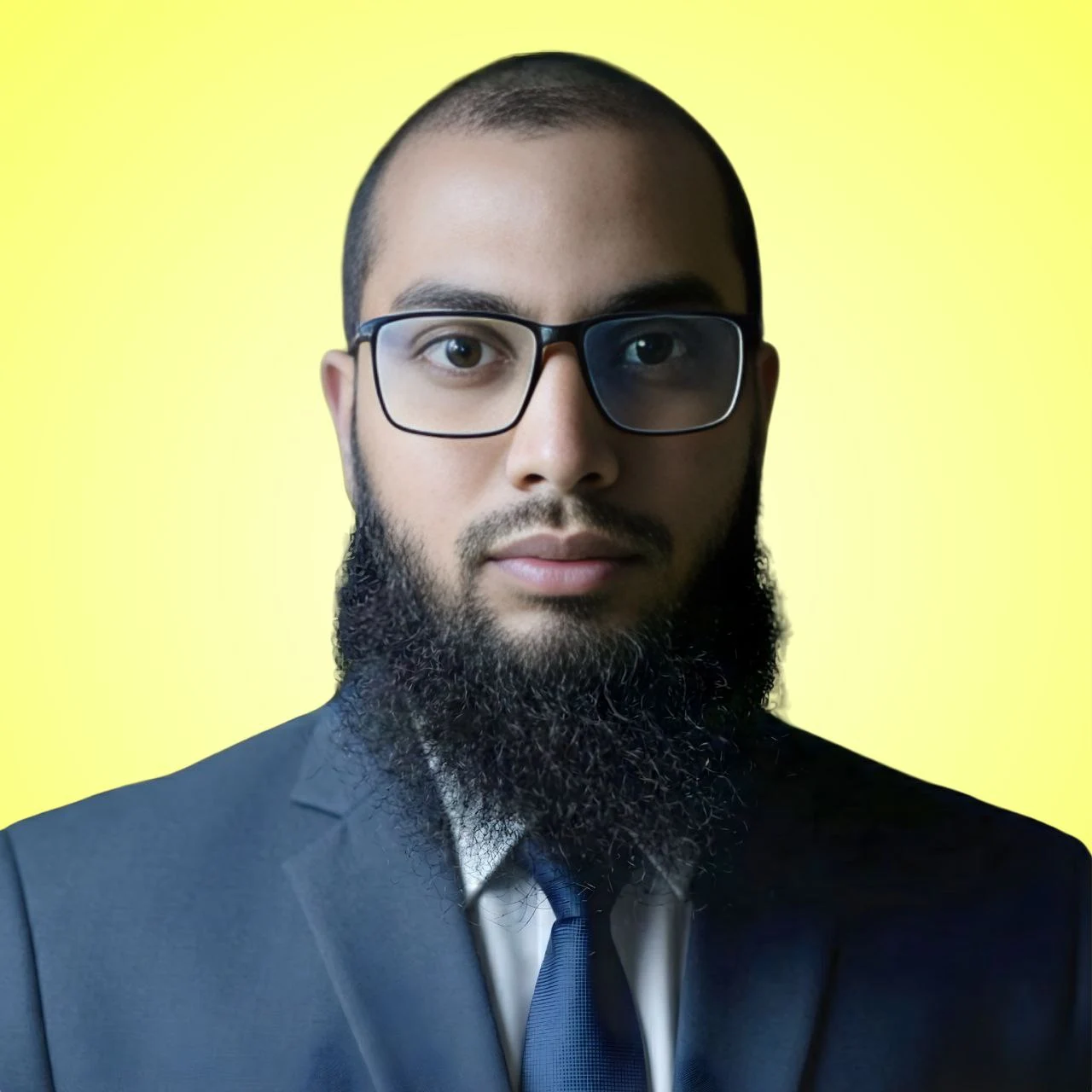
Md Rokonuzzaman is a semantic SEO and topical authority specialist who focuses on building durable, entity‑based search visibility instead of chasing short‑lived keyword tricks. Through rokonz.com, he helps brands structure their knowledge, content, and internal links around entities, attributes, and relationships so they can earn and maintain topical authority.
He has learned—and continues to actively learn and practice—Koray's semantic SEO frameworks. In practice, that means he:
- Builds deep semantic topical maps around entities, intents, and query journeys.
- Creates question‑driven content briefs that mirror how users actually search.
- Follows algorithmic authorship principles so content is structured the way modern ranking systems evaluate expertise, information gain, and topical depth.
This article answers two core questions:
- Who is Md Rokonuzzaman as an SEO professional and strategist?
- Why did he decide to specialize so deeply in semantic SEO and Koray‑style topical authority frameworks?
It also shows how his methods translate into practical services: semantic SEO consulting, semantic‑first SEO audits, and topical map & content strategy.
How Did Md Rokonuzzaman's Journey in Digital Marketing Lead Him to Semantic SEO?
Like many SEOs, Md Rokonuzzaman started in a world dominated by keyword lists, on‑page checklists, and link‑building campaigns. Early in his career he worked on typical SEO projects:
- 👉 Optimizing title tags and meta descriptions.
- 👉 Making sure "focus keywords" appeared in headings and body copy.
- 👉 Chasing backlinks and quick wins around specific phrases.
Over time, he kept seeing the same pattern:
- 📉 Rankings could move quickly up—but also quickly down—after each major algorithm update.
- ❌ Content that looked good in a keyword tool often failed to satisfy real users.
- ✅ Sites with strong brand and clear topical focus tended to survive volatility better than those relying on tricks.
These patterns pushed him to look beyond classic keyword SEO and into how search engines actually understand meaning, relationships, and context. That curiosity led him into semantic SEO, entities, and knowledge graphs—and eventually into Koray's frameworks for semantic topical maps, content briefs, and algorithmic authorship.
By studying and implementing these Koray's frameworks, he found a more stable, system‑driven way to grow websites: less guesswork around keywords and more focus on language, entities, and information gain.
What Did Md Rokonuzzaman Learn from Traditional SEO That Shaped His Semantic SEO Mindset?
Traditional SEO gave Md Rokonuzzaman a lot of practical experience, but it also exposed the limits of a purely keyword‑centric approach. Several recurring issues shaped his current mindset:
- Keyword cannibalization: Multiple articles targeted slight keyword variations but competed with each other, confusing both users and search engines.
- Thin or generic content: Many pages were technically "optimized" but said the same things as competitors, offering little real information gain.
- Short‑term ranking wins: Some tactics worked for a while but collapsed after core updates because they weren't aligned with how algorithms evaluate entities, intent, and authority.
- Weak topical signals: Sites that spread content randomly across categories struggled to build a clear topical profile.
Key Conclusions:
- 🧠 A site needs a coherent topic model, not just isolated keywords.
- 🎁 Search engines reward clear entities, relationships, and topical coverage, not keyword stuffing.
- ⏳ Long‑term SEO success comes from behaving like a well‑structured knowledge base.
These lessons are why his current work is built almost entirely around semantic SEO, entity‑level thinking, and topical authority.
What is Semantic SEO and How is It Different from Traditional Keyword‑Focused SEO?
Semantic SEO is an approach that optimizes for meaning and relationships, not just for isolated keywords. Instead of asking, "Which exact phrase should I repeat?", semantic SEO asks:
- What are the entities involved (people, brands, products, concepts)?
- Which attributes matter (features, use cases, benefits, metrics, locations)?
- How are these entities and attributes connected in the real world and in the searcher's mind?
Traditional keyword SEO often treats search terms as strings of text. Semantic SEO treats them as signals about intent and entities. In practice, semantic SEO means:
- 🕸️ Modeling a niche as a graph of entities and topics.
- ❓ Ensuring coverage of all important questions, subtopics, and relationships.
- 🏗️ Structuring content and internal links so that search engines can infer a clear, consistent knowledge graph for the site.
For Md Rokonuzzaman, semantic SEO is the natural evolution of SEO: it aligns what humans care about (concepts, problems, and solutions) with how modern search systems work (entities, context, and intent).
Why Does Semantic SEO Matter So Much in Today's Search Landscape?
Search engines have shifted from keyword matching to intent and entity understanding. This shows up in several ways:
- 🪪 Knowledge panels and entity cards highlight people, brands, and concepts directly.
- 🤔 People Also Ask and related questions expose the web of user intents and follow‑up questions.
- 🏆 E‑E‑A‑T signals (Experience, Expertise, Authoritativeness, Trustworthiness) reward real expertise and coherent topical coverage.
Semantic SEO matters because it:
- ⚓ Stabilizes rankings by aligning your site with how search engines model topics.
- 😊 Improves user experience by answering real questions in a structured, logical flow.
- 🏢 Supports brand building by making your person and organization entities clear and well‑connected.
For name queries like "Md Rokonuzzaman", semantic SEO helps search engines understand that he is a person entity connected to:
- 🎓 Semantic SEO consulting.
- 🔍 Semantic‑first SEO audits.
- 🗺️ Topical map and content strategy.
- 🌐 The website rokonz.com.
- 📱 Social media: LinkedIn, Facebook, Instagram, YouTube, Google Profile
That is exactly the kind of graph Rokon aims to strengthen with every piece of content he publishes.
What Specific Skills and Strengths Make Md Rokonuzzaman a Semantic SEO Specialist?
Rokon's specialization is built on a set of skills that go beyond surface‑level optimization:
What Verified Certifications Does Md Rokonuzzaman Hold in Semantic SEO, AI, and Technical Search?
Continuous learning and formal validation are critical in the rapidly evolving landscape of Search Engine Optimization and Artificial Intelligence. Md Rokonuzzaman holds verified credentials across Semantic SEO, Technical Search, AI Analysis, Schema Markup, and Digital Marketing:
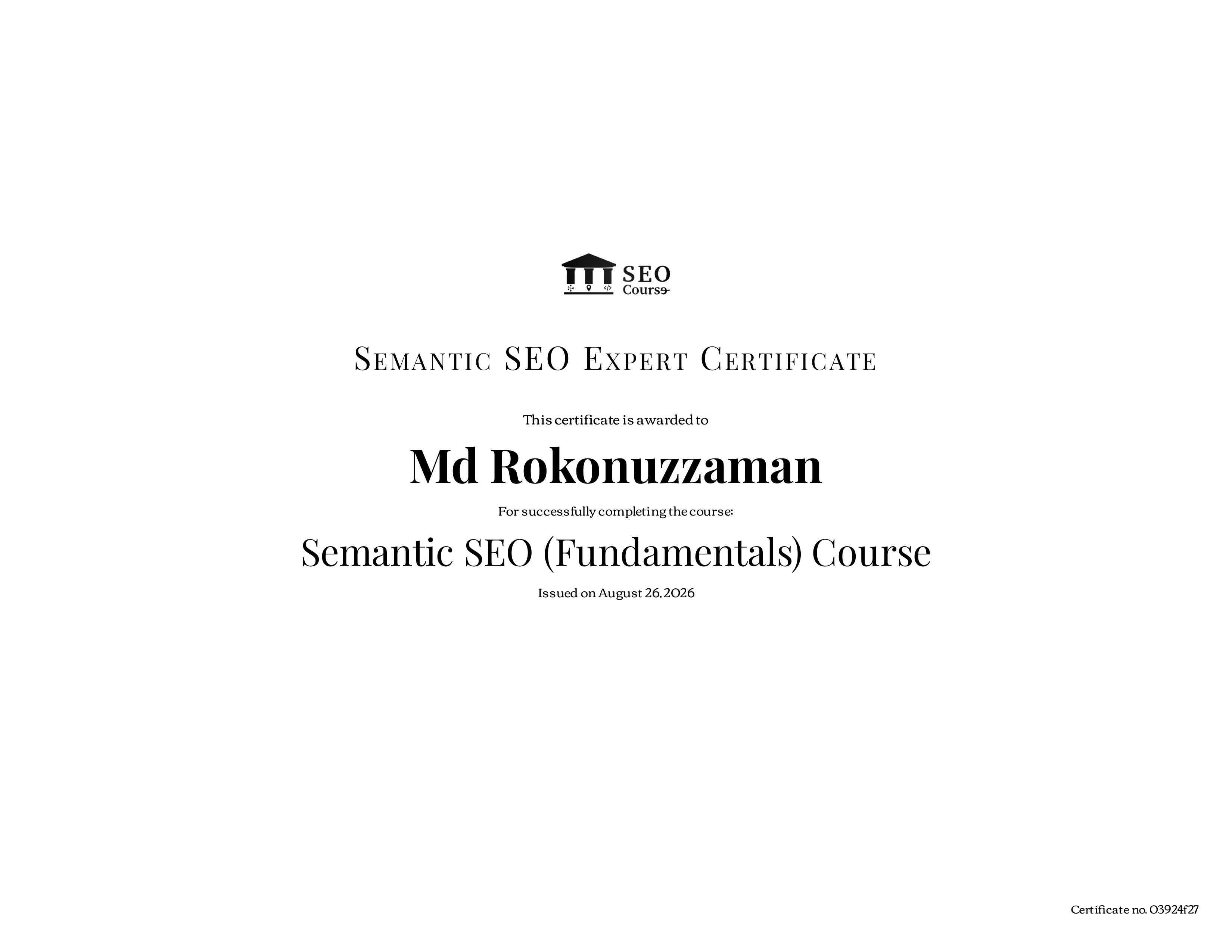
Holistic & Semantic SEO
Holistic SEO by Koray Tuğberk GÜBÜR
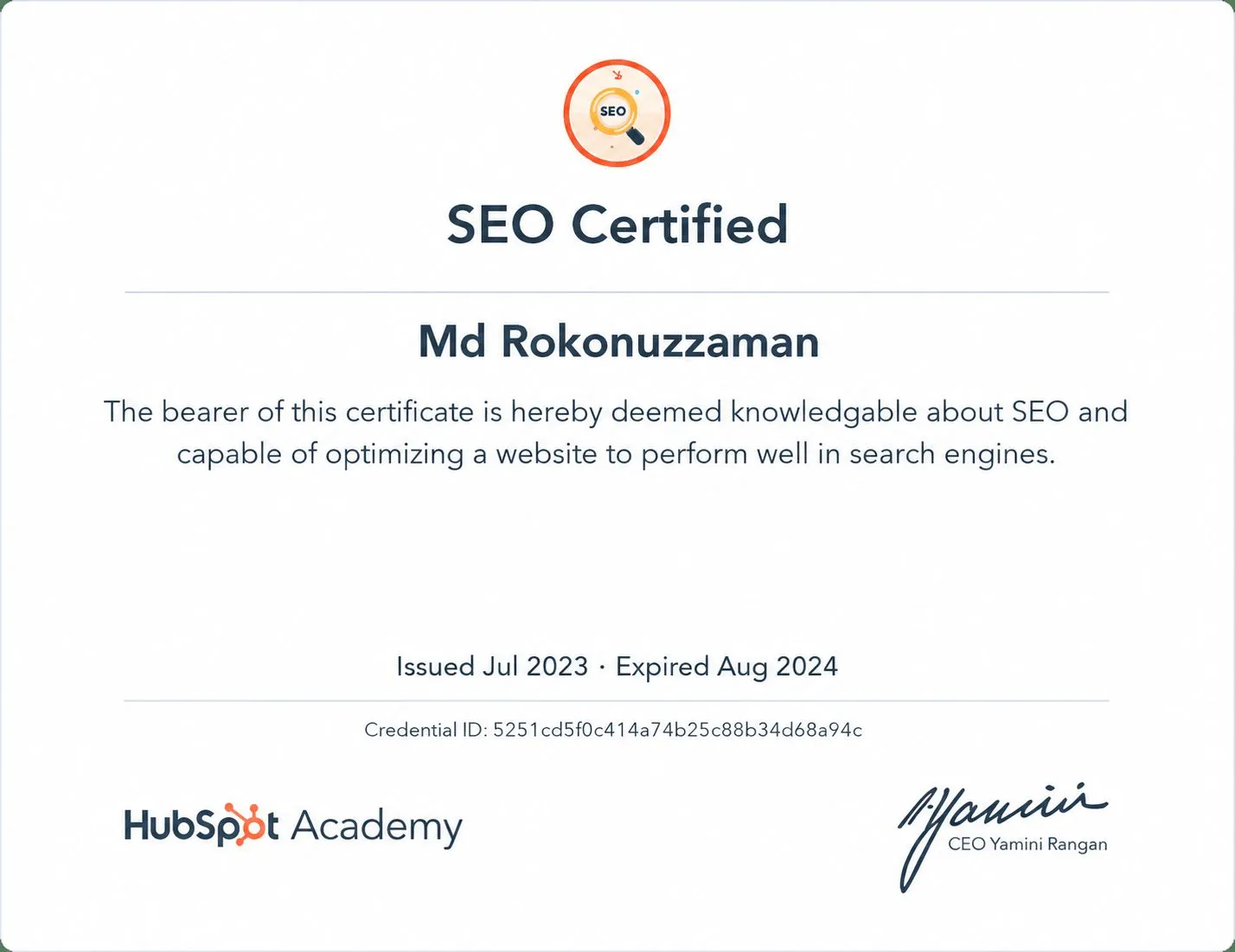
SEO Certificate
HubSpot Academy
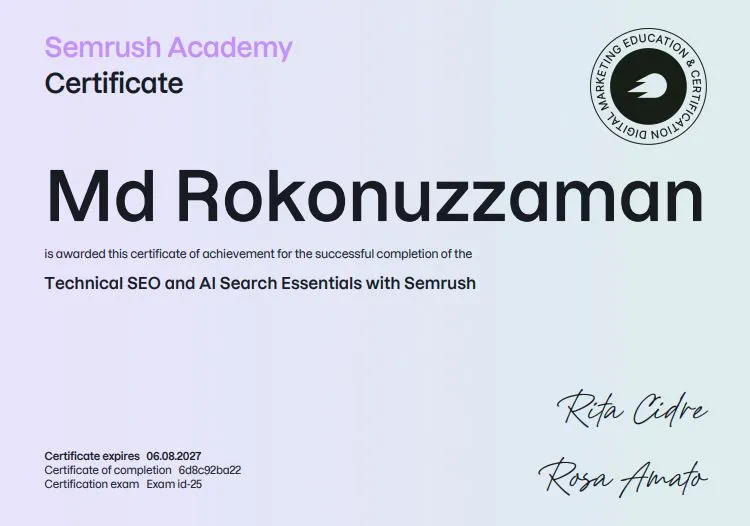
Technical SEO & AI Search Essentials
Semrush Academy
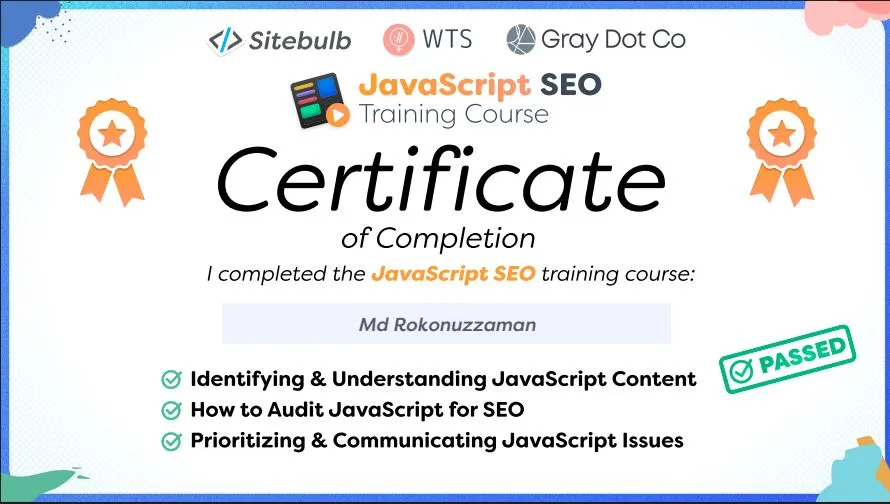
JavaScript SEO
Sitebulb Academy
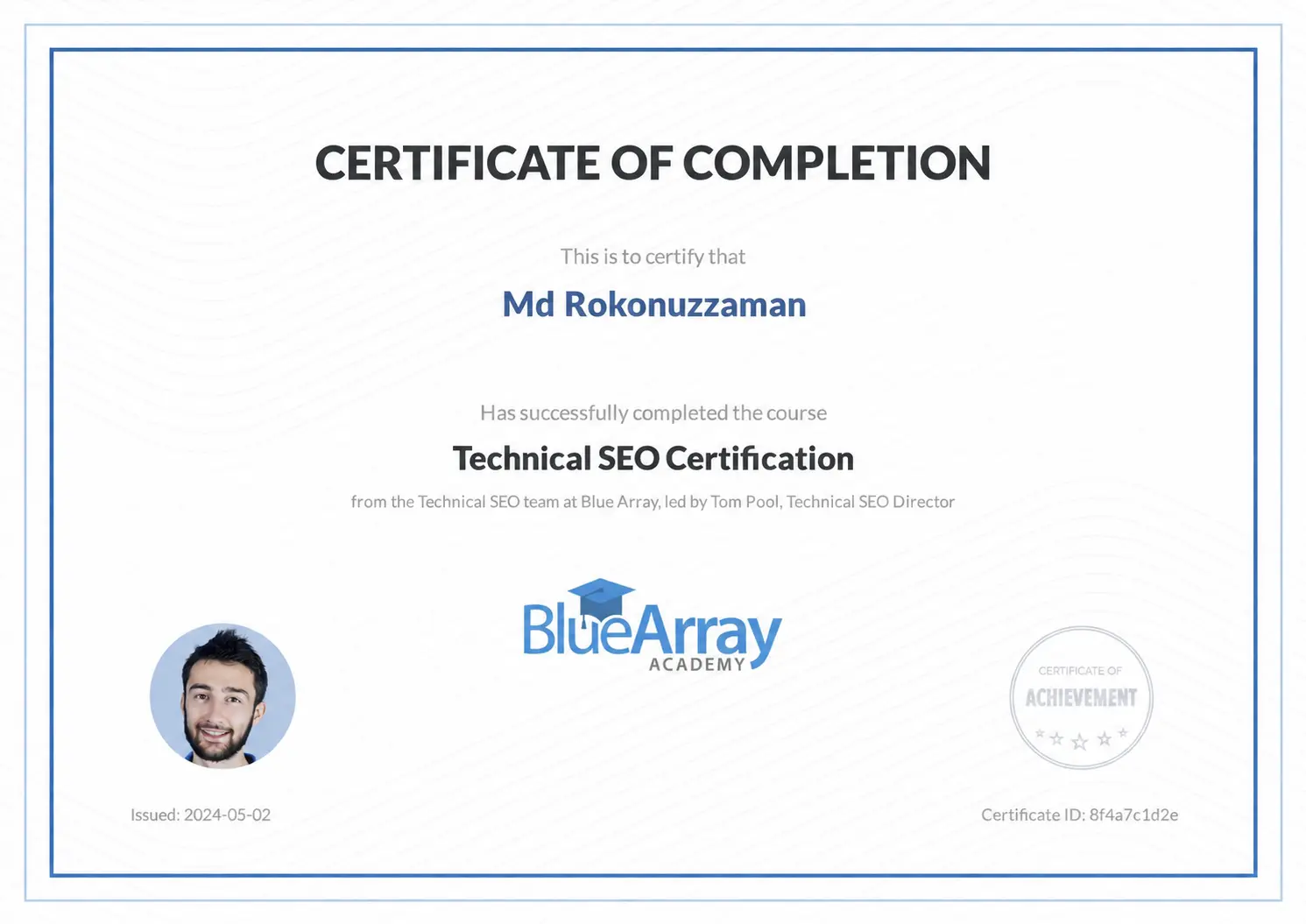
Technical SEO Certification
Blue Array Academy
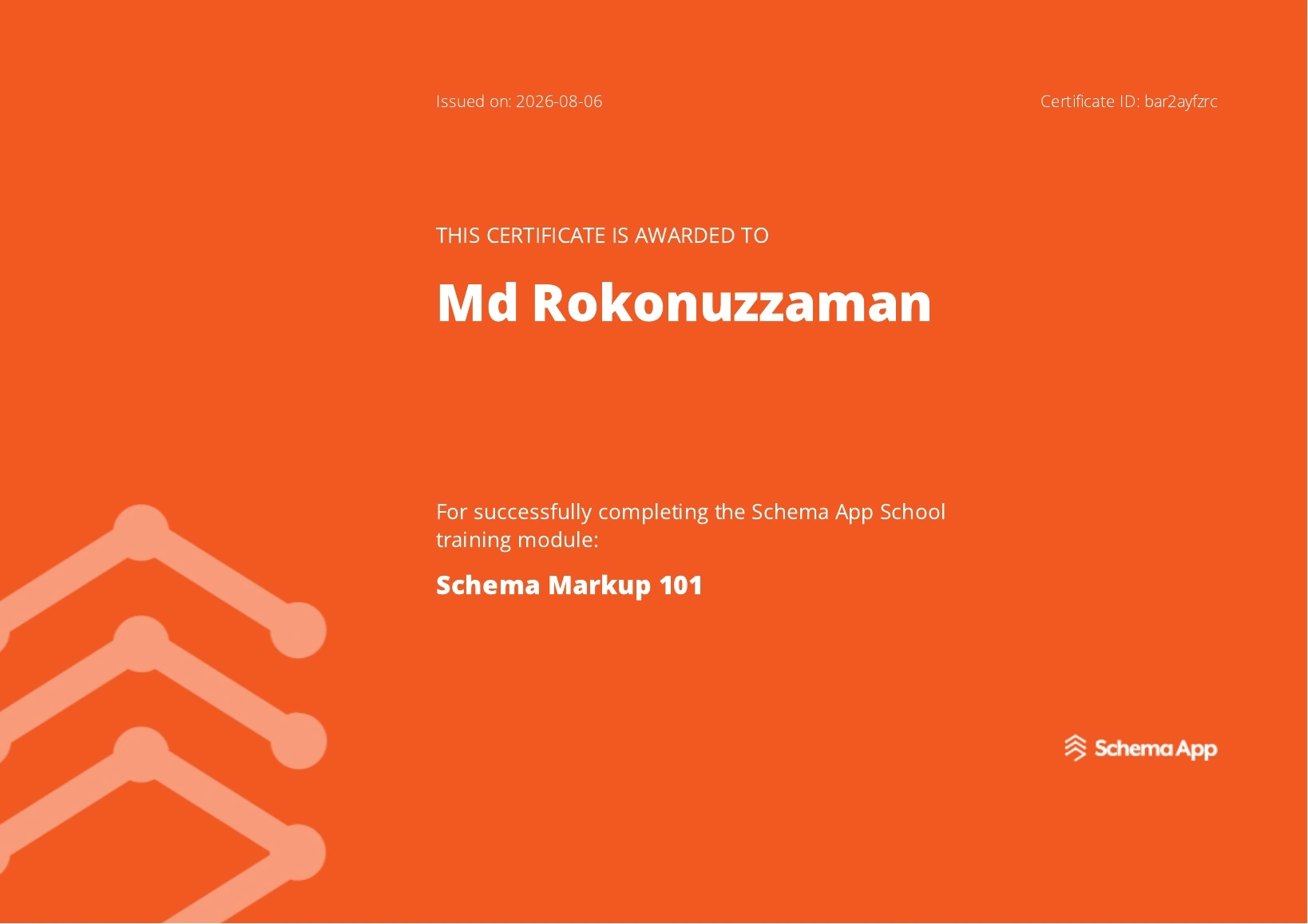
Schema Markup 101
Schema App
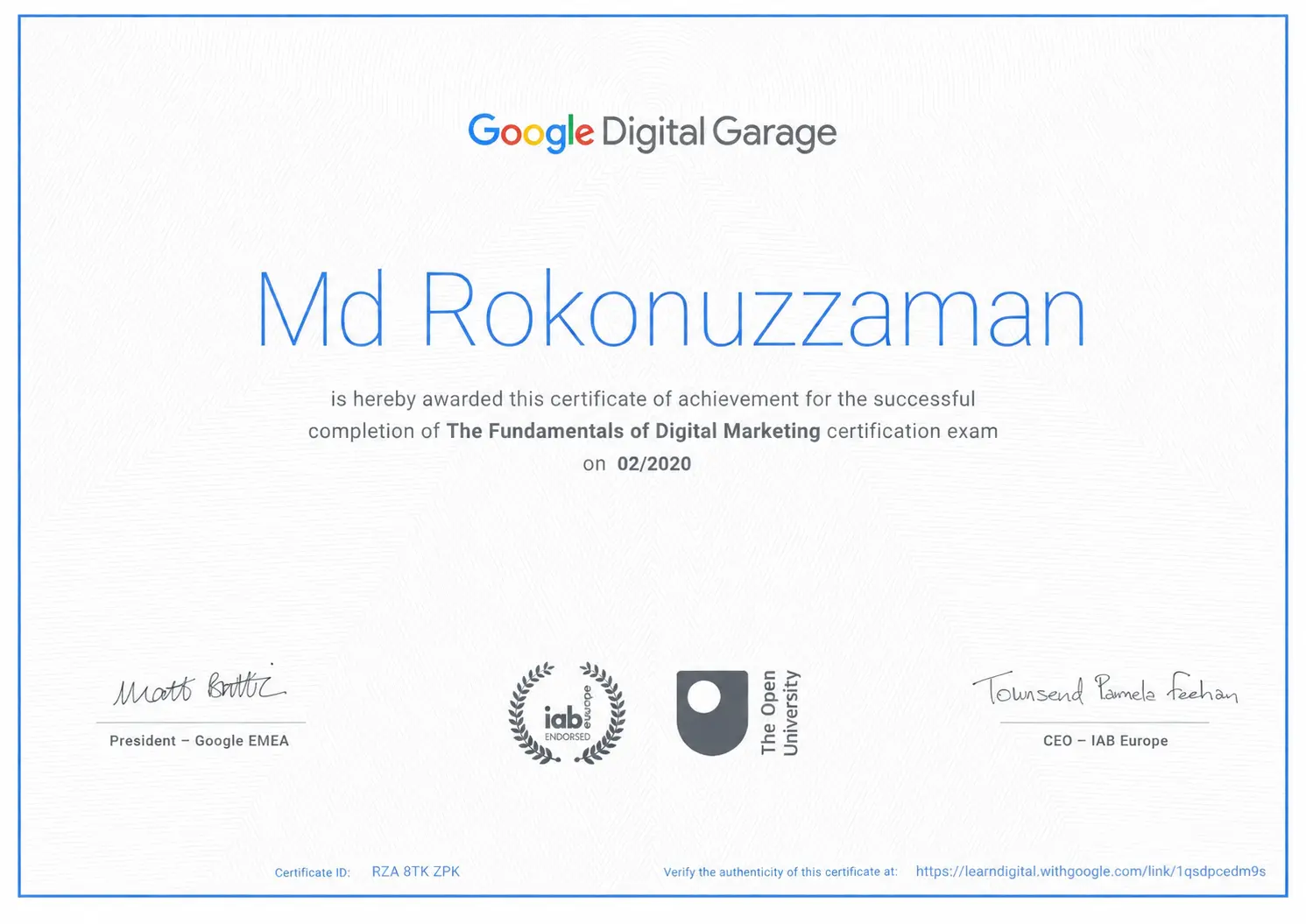
Fundamentals of Digital Marketing
Google Digital Garage
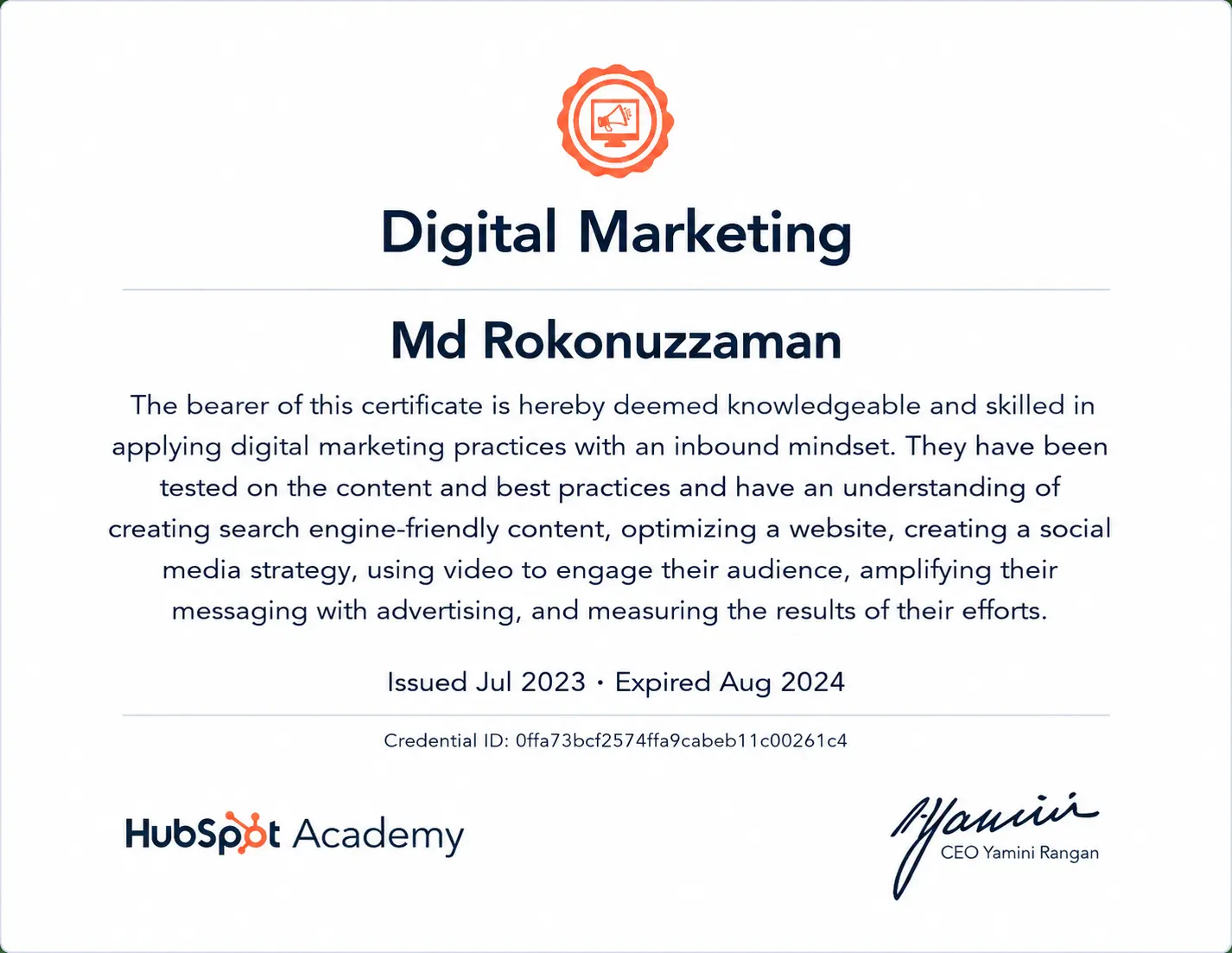
Digital Marketing Certificate
HubSpot Academy
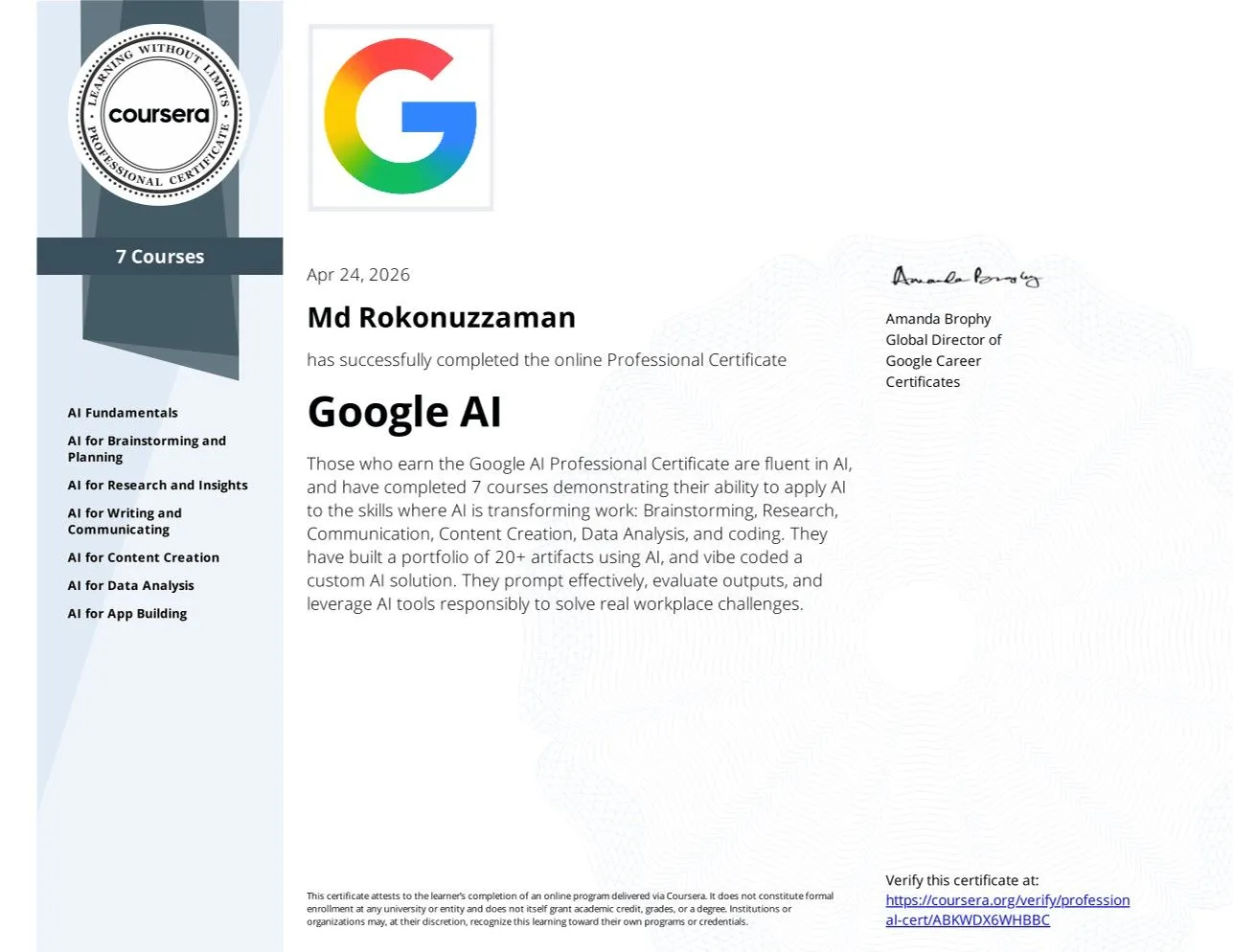
Google AI Essentials
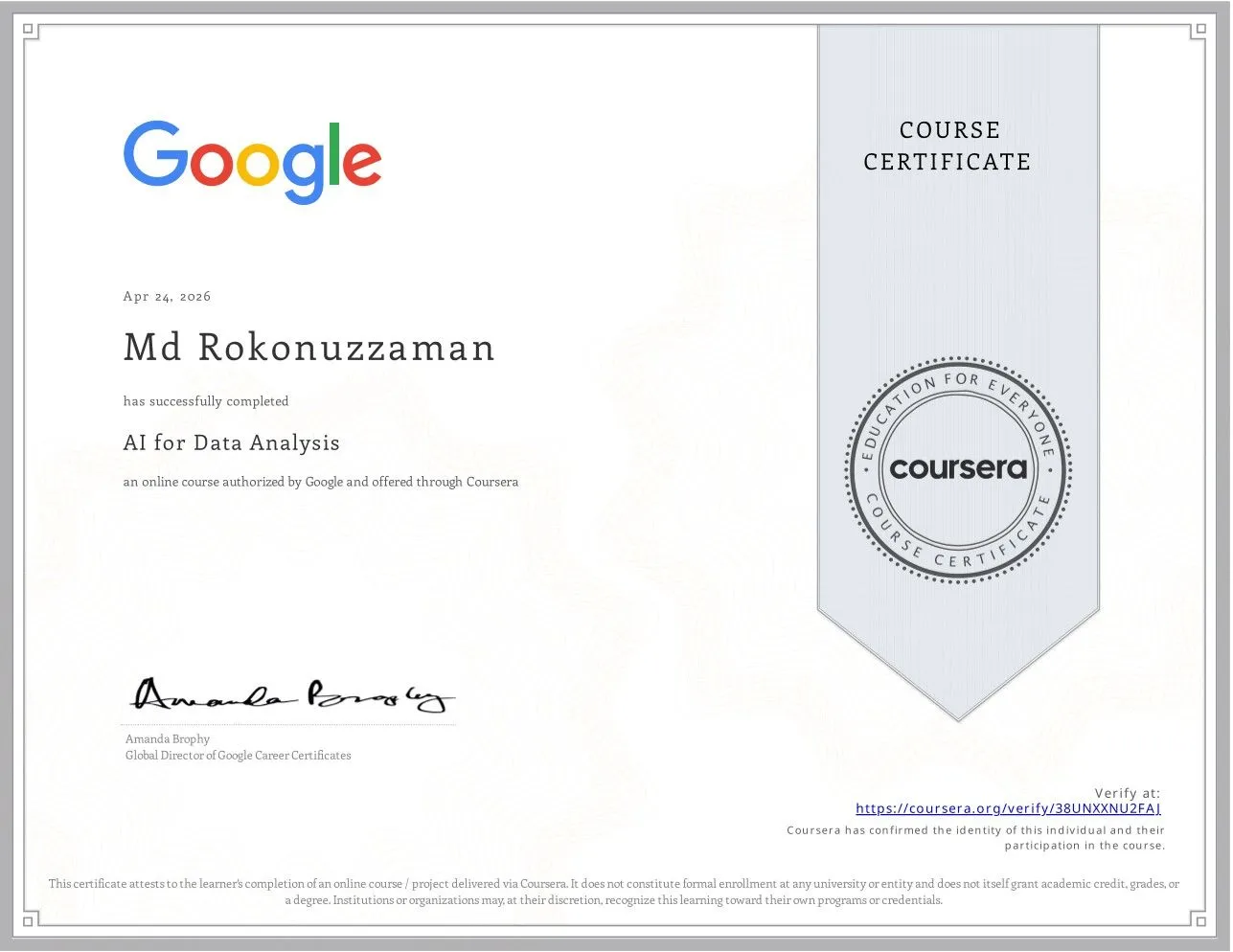
AI for Data Analysis
Professional Certification
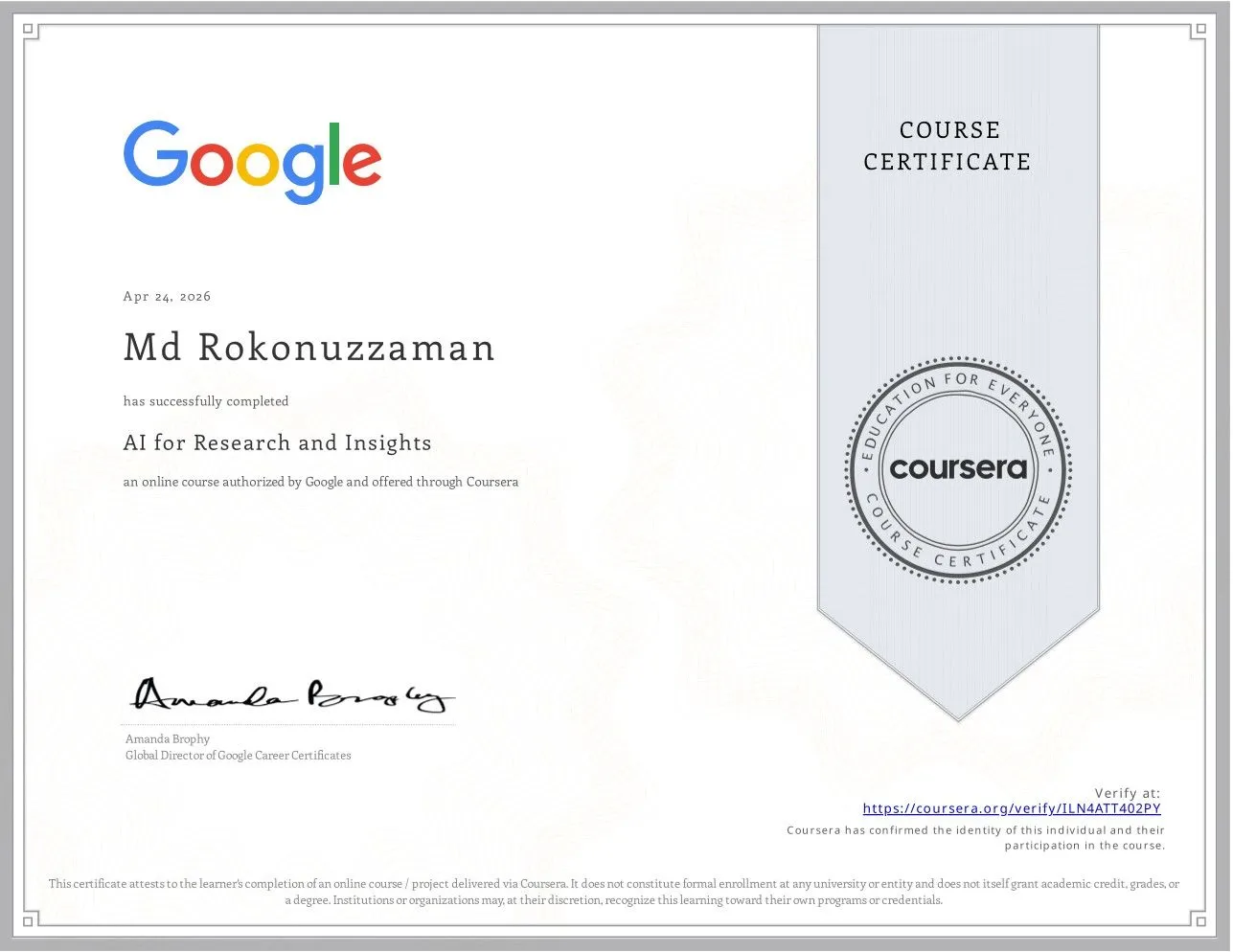
AI for Research & Insights
Professional Certification
How Does Md Rokonuzzaman Research Entities, Topics, and User Intent for Semantic SEO?
When Rokon begins work in a new niche, he does not start with a raw keyword list. Instead, he follows a research flow like this:
1. Identify Core Entities and Problems
- 🎯 Who or what is at the center (brand, product, category, problem)?
- 🔗 Which other entities are naturally connected (audiences, tools, locations, methods)?
2. Analyze SERPs in Depth
- 🔍 Which entities keep appearing in titles, snippets, and knowledge panels?
- ❓ What questions show up in People Also Ask and related searches?
- 📄 Which content formats dominate (guides, comparisons, service pages, product pages)?
3. Map User Intents and Stages
- 💡 Awareness: "What is…?" and "Why does…?"
- 🤔 Consideration: "How does… work?" and "Which is better…?"
- ✅ Decision: "Who offers…?" and "How much does… cost?"
4. Translate Insights into a Topic Model
- 📂 Group related questions under parent topics.
- 🔗 Associate each topic with its core entities and attributes.
- 🏗️ Decide which topics should become cornerstone pages and which should be supporting articles.
This process ensures that any topical map or content plan he produces is grounded in how real users search and how search engines already understand the niche.
Koray's frameworks influence this research: they encourage him to treat SERPs as dynamic knowledge graphs, to focus on information gain, and to prioritize questions that create the biggest semantic coverage with the least redundancy.
How Does He Build Topical Maps and Content Structures Around Semantic SEO?
Once research is done, Rokon turns raw insights into a structured topical map. Typical steps include:
Defining Silos and Sub‑Silos
- 💰 Core money silos such as semantic SEO consulting, semantic‑first SEO audits, and topical map & content strategy.
- 🧱 Supporting silos for fundamentals, use cases, and personal brand.
Assigning Roles to Pages
- ⭐ Core Section (services and key offers).
- 📄 Outer Section (Supporting articles that answer specific questions or cover edge cases).
Designing Internal Link Networks
- 🔗 Hubs link to all relevant subtopics.
- 🔄 Subtopics reinforce their parent hub and cross‑link where user journeys overlap.
- 🔙 Case studies, testimonials, and works pages connect back to concepts and services.
Here again, Koray's influence appears in how he prioritizes content:
- 📏 He looks at semantic distance between topics to decide which articles should be closest to each hub.
- 🆕 He focuses on information gain, making sure each new piece adds fresh angles instead of repeating what already exists.
- ❓ He uses question‑based headings so each section corresponds to a distinct user intent.
By treating the site as a semantic network instead of a flat list of pages, he helps clients:
- 🚫 Avoid cannibalization and duplication.
- 🕷️ Improve crawl efficiency and discoverability.
- 📈 Signal clear topical authority to search engines.
How Does Semantic SEO Shape the Core Services Offered by Md Rokonuzzaman?
Semantic SEO is not a side skill for Rokon; it is the engine behind all three of his core services:
- 🤝 Semantic SEO consulting – Ongoing or project‑based guidance to design and implement entity‑based strategies.
- 🔍 Full SEO audits (semantic‑first) – Audits that look beyond technical basics to evaluate entities, topics, and topical coverage.
- 🗺️ Topical map & content strategy – Deep topic modeling and content planning based on entities, intent, and information gain.
Each service is different in scope but shares the same foundation: understanding and shaping the knowledge graph around a brand.
How Does Md Rokonuzzaman Apply Semantic SEO in His Consulting and Audit Work?
In consulting and audits, Rokon's focus is on diagnosing and fixing the semantic structure of a site, not just its technical hygiene. Typical activities include:
Auditing Current Topical Coverage
- 🔍 Which entities are clearly defined on the site?
- ❓ Which important topics or attributes are missing or under‑explained?
Detecting Structural Issues
- ⚔️ Pages that overlap or cannibalize each other.
- 🏝️ Orphaned topics that are not connected to any hub.
- ⚠️ Confusing or inconsistent internal link signals.
Recommending Semantic Improvements
- 🔄 Merging or refocusing competing pages around clearer entities.
- ➕ Creating new hubs and clusters to cover missing topics.
- ⚓ Adjusting anchor texts and link patterns to reflect entity relationships.
Technical SEO still matters, but his audits treat it as supporting infrastructure for a robust topic and entity model.
How Does He Design Semantic Topical Maps and Content Strategies for Clients?
When a client engages Rokon specifically for topical maps and content strategy, the output is a practical, prioritized roadmap rather than just a theoretical diagram. A typical deliverable includes:
Topical Map by Section
- Core money Section (services or product categories).
- Outer (Supporting) Section (fundamentals, use cases, vertical‑specific content, personal brand).
List of Planned Pages and Articles
- Proposed titles in question format.
- Page roles (money, hub, supporting, proof).
- Recommended locations on the site (for example, Resources, Services, Works).
Content Sequencing and Priority
- Which cornerstone pieces to ship first.
- How to layer in supporting content to expand topical authority.
Internal Linking Recommendations
- How each new piece should link back to hubs, services, and brand pages.
This is exactly the kind of structured thinking behind the master topical map and content plan documented for rokonz.com.
What Kinds of Results and Transformations Has Md Rokonuzzaman Achieved with Semantic SEO?
Without relying on hype or unrealistic promises, Rokon's work aims for a few consistent transformations:
- 📚 From scattered content to coherent topic models: Clients move from ad‑hoc blog posts to a clearly structured knowledge base.
- 🎯 From keyword chasing to entity‑driven strategy: Effort shifts from chasing individual phrases to owning whole topics and problem spaces.
- 🛡️ From volatile rankings to more stable visibility: As topical authority builds, sites tend to weather algorithm updates better.
In practice, this often shows up as:
- 🚀 Stronger rankings for broad, high‑value informational queries.
- 🛒 Better conversion paths from educational content into service or product pages.
- 📢 Clearer brand signals around the person or organization entity.
For his own brand, this article and the wider content strategy around it are designed to help search engines and users see "Md Rokonuzzaman" as synonymous with semantic SEO and topical authority.
How Does He Collaborate with Clients During Semantic SEO Engagements?
Rokon's collaboration style is built around transparency and shared understanding. Typically, he:
- 🧠 Explains the "why" behind recommendations: Clients see how each change fits into the broader knowledge graph and topical strategy.
- 📊 Shares visual or tabular representations of topical maps: So marketing and content teams can work with the map directly.
- 🤝 Aligns with internal teams: Product, content, and development teams understand their role in implementing semantic SEO.
- 🔄 Focuses on repeatable workflows: Instead of one‑off fixes, he helps teams adopt processes for ongoing entity research, content planning, and internal linking.
The result is not just a better site, but a team that thinks more semantically about everything they publish.
Why is He Focused on Teaching Semantic SEO, Not Just Selling Services?
Semantic SEO is still misunderstood or underused in many organizations. Rokon believes that for semantic SEO to work long‑term, teams must understand the concepts, not just follow instructions.
That is why his content for rokonz.com emphasizes:
- 📖 Clear explanations of entities, attributes, and relationships.
- 🗺️ Transparent frameworks for topical mapping and content planning.
- 💡 Practical examples that teams can adapt, even if they are not clients yet.
By teaching openly, he strengthens both:
- 👨🏫 His own position as a trusted semantic SEO specialist.
- 🗣️ The overall quality of conversations around entity‑based SEO in the industry.
How Can You Work with Md Rokonuzzaman if You Want to Apply Semantic SEO to Your Site?
If you want to bring semantic SEO into your own organization, you can start in several ways:
Explore Resources
Read the articles and resources on rokonz.com Resources to understand his frameworks.
Engage for Consulting
Work with him to design or refine your semantic SEO and topical authority strategy.
Request a Semantic‑First SEO Audit
Get an audit that evaluates not only technical health but also entities, topical coverage, and internal linking.
Commission a Topical Map and Content Strategy
Use a custom topical map to guide content production, internal links, and future product or service pages.
You can start any of these paths by reaching out via the Contact page.
What Are Frequently Asked Questions About Md Rokonuzzaman and Semantic SEO?
This article sits in the personal brand and proof silo. It is designed to rank for name queries like "Md Rokonuzzaman" while connecting that person entity to semantic SEO, topical authority, and the three core services.
Question‑based headings reflect how users search and how SERPs are structured. They also encourage complete, intent‑driven coverage of a topic, which supports both user satisfaction and topical authority.
It does both. It strengthens Rokon's personal brand while also building a clear entity profile and interlinking opportunities that support the performance of service, resource, and case‑study pages.
Yes. While this article is about Md Rokonuzzaman and semantic SEO, the underlying principles—entity modeling, topical mapping, and intent‑driven content—apply to almost any industry or website.
You can contact Md Rokonuzzaman via rokonz.com to request semantic SEO consulting, a full semantic-first SEO audit, or a custom topical map and content strategy engagement.